Water Damage Restoration in Orange County: Find Local Help
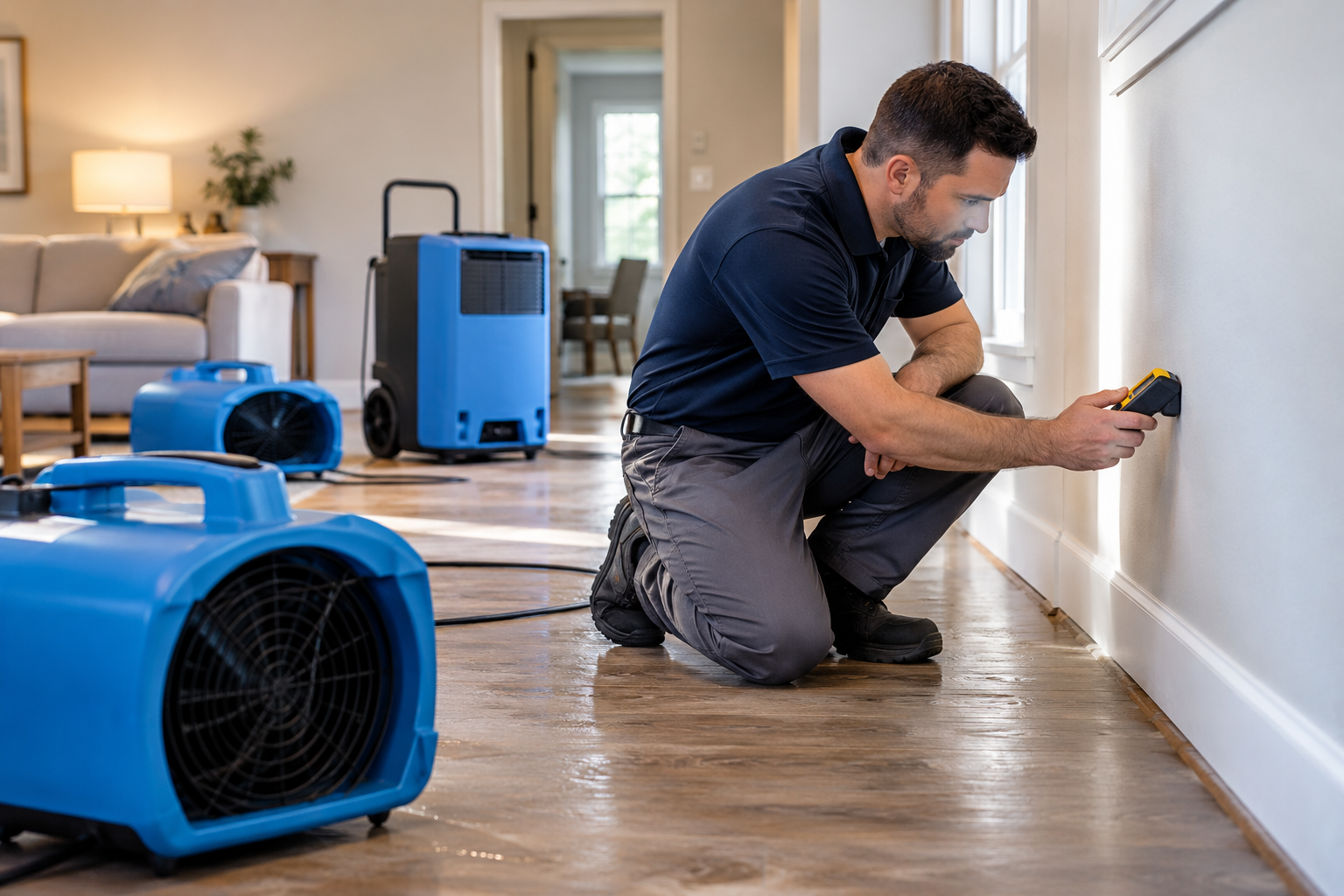
To find water damage restoration in Orange County, first stay clear of unsafe areas, then contact a company that can assess the water source, affected materials, and drying needs at your address. Ask for a written emergency scope, equipment charges, monitoring plan, and a clear division between mitigation and reconstruction before authorizing work.
A wet floor may be the visible part of a larger problem. Water can affect cabinets, wall cavities, flooring assemblies, and belongings differently. The purpose of this guide is to help you organize the first calls and compare restoration services. It does not determine whether a building is safe to enter or whether an insurance policy covers a loss.
Put Safety Before The Cleanup
Do not walk into standing water to reach electrical equipment. The CDC’s electrical hazard guidance warns against entering water to access a power switch and advises using a qualified electrician when electrical systems have become wet. Stay out of affected areas if electrical or structural safety is uncertain.
If there is an immediate threat to life, fire, or another active emergency, contact emergency services. A restoration appointment is not a substitute for emergency response. Describe hazards honestly to the dispatcher, including sewage, water near electrical equipment, a sagging ceiling, or an area you cannot access safely.
Keep children and pets away from the affected space. Do not turn a household fan toward suspected mold or contaminated water simply to speed things up. EPA guidance distinguishes clean water damage from contaminated water situations, which require appropriate expertise and precautions.
Explain The Situation Without Guessing At The Cause
When calling a restoration company, provide what you know: the time you discovered the water, rooms affected, whether water is still entering, and any source already identified. Separate observations from assumptions. “Water is coming through the ceiling below the upstairs bathroom” is more useful than claiming a specific pipe has failed.
Give the property address, city, access details, and the name of the person authorized to approve work. Mention whether the property is occupied and whether a landlord, association, or commercial manager must coordinate access. These facts help the company prepare for the visit.
Photographs taken from a safe location can document the initial condition. Include an overview and closer views of visible damage without disturbing unsafe materials. Keep a simple timeline of calls, visits, and work authorizations. Clear records are useful even before you know whether an insurance claim will be involved.
Understand The Main Restoration Stages
Source Control And Initial Assessment
Stopping ongoing water entry and assessing the affected area are distinct from drying. A restoration company may need a plumber, roofer, or another trade to correct the source. Ask who arranges that work and whether it is included in the emergency authorization.
The assessment should explain where moisture was found, which materials are involved, and what conditions limit inspection. Ask how the company records its findings. A photo of surface staining alone does not tell you whether the material behind it has been evaluated.
Extraction And Drying
Water removal and drying should have a documented purpose. Ask which areas will receive equipment, how equipment quantities are selected, and how progress is measured. The company should explain the difference between removing standing water and addressing moisture remaining in materials.
Request the expected monitoring schedule and how you will be told that equipment can be removed. Daily charges can accumulate, so clarify billing units, minimum periods, and who authorizes extensions. An initial estimate may change as conditions become clearer, but the communication process should not be uncertain.
Removal, Remediation, And Reconstruction
Some affected materials may need removal, while others may be candidates for drying or cleaning. Ask for the basis of each recommendation. Avoid agreeing to broad demolition without understanding the locations, documentation, and proposed next steps.
Reconstruction can include insulation, drywall, cabinets, flooring, paint, and work by other trades. Find out whether the same company performs that stage or whether you need a separate contractor. A property can be dry while still requiring substantial rebuilding before normal use resumes.
Act Promptly Without Accepting Unclear Terms
EPA’s mold and moisture guidance emphasizes addressing water problems and drying wet materials promptly, commonly within 24 to 48 hours where appropriate. This is a prevention guideline, not proof that mold is absent before a deadline or inevitable afterward.
Timely action does not require signing an unexplained agreement for every possible service. Ask for the initial work to be described clearly, including the price basis and authorization limits. You can request immediate assessment and stabilization while separately reviewing the proposed reconstruction.
Ask who can approve additional demolition or equipment days if you are unavailable. Put the contact process in writing. A restoration project may move quickly, and it is easier to prevent misunderstandings when the company knows exactly whom to call and what approval is required.
Find Local Help For Your Property
Confirm that the company serves your precise Orange County address and can actually dispatch a crew. “Emergency service” does not establish an arrival time. Ask whether the company is sending its own staff, referring the work, or using a subcontractor.
A condo in Irvine may require coordination with neighboring units and association management. A commercial property in Santa Ana may have operating or access constraints. A house in a coastal city may have a completely different layout from another nearby house. Explain the property’s conditions rather than relying on broad neighborhood assumptions.
Use the Restoration & Remediation category to identify the service area within the directory, and the locations hub to orient your search. A category page does not confirm that a company has inspected your building, is available today, or is approved by your insurer.
Check The Company And The People Doing The Work
Ask for the business’s legal name, contact information, and details of the proposed work. If licensed contracting work is part of the project, check the appropriate current record with CSLB. Ask which company signs the agreement and which company will perform reconstruction.
Request evidence of relevant training and insurance, and verify any claimed certification with its issuing organization when it affects your decision. A logo on a truck is not the same as a current credential for the person supervising the work.
Ask about experience with your situation: an appliance leak, sewage backup, multiunit loss, or storm related intrusion. The company should explain its process and limitations without guaranteeing a result before assessment. References and reviews can help assess communication, but they do not replace a clear scope.
Questions To Ask The Restoration Company
- What work is needed immediately, and why?
- Has the water source been corrected or does another trade need to attend?
- Which rooms and materials are included in the assessment?
- How are moisture readings and drying progress documented?
- What are the equipment, labor, monitoring, and disposal charges?
- Who authorizes additional days or expanded work?
- Is reconstruction included or handled under a separate contract?
- What completion records will I receive?
Ask who your day to day contact will be. If multiple crews attend, identify who coordinates them and maintains the record. A single point of communication helps you understand whether a change is an observation, a recommendation, or work that you are being asked to authorize.
Review Emergency Authorizations And Estimates
Read the agreement even when the visit is urgent. Look for minimum charges, after hours rates, equipment billing periods, demolition allowances, and cancellation terms. Ask the company to explain any clause assigning claim rights or giving it authority beyond the services you intend to approve.
A useful estimate separates initial mitigation from later repairs. It should identify assumptions and conditions that could change the amount. Ask whether the total is fixed, estimated, or billed by time and materials, and how you will receive updated figures.
For reconstruction, request the same level of detail you would expect for a planned remodeling project. Materials, quantities, exclusions, permits, milestones, and cleanup matter. CSLB’s contract guidance can help you understand the importance of written scope and documented changes for applicable contracting work.
Keep Insurance Questions Separate From Work Authorization
If you intend to report a loss, contact your insurer through its established claims process and ask what documentation it needs. Coverage depends on your policy and circumstances. A contractor’s willingness to bill an insurer does not guarantee reimbursement.
Ask the restoration company which documents it will provide and whether it communicates directly with the adjuster. Clarify your responsibility for deductibles, excluded work, and charges the insurer disputes. Avoid assuming that “we handle insurance” means you have no financial obligations.
Keep copies of the initial condition photographs, estimates, signed authorizations, equipment records, invoices, and communications. Record claim numbers and contact names separately from the contractor’s project number. Organized records help distinguish an insurance discussion from a decision about which work you have approved.
Understand Mold Related Recommendations
Water damage and mold evaluation overlap, but they are not identical services. Ask whether the company observed visible growth, suspects concealed growth, or is recommending additional assessment. Each statement should be tied to an observation or a defined limitation.
EPA’s brief guide to mold and moisture explains that resolving moisture is central to a successful cleanup. Ask how the proposed work addresses the source, affected materials, and verification of completion rather than accepting a surface treatment as the entire answer.
If a company recommends testing, ask what question the test is intended to answer, who interprets the result, and how it would change the work. Do not treat a generic test package as automatically necessary for every leak. Seek an appropriately qualified assessment when conditions or health concerns require it.
Coordinate Access And Protect Records
Provide gate instructions, parking information, and the contact details of any property manager. In multiunit buildings, ask how the company will coordinate affected areas without assuming you can authorize work inside another unit. Permission and access should be established before crews arrive.
Ask how belongings are inventoried and moved. If items leave the property for cleaning or storage, request a written inventory, destination, contact information, and pricing. Photograph valuables when safe, and ask how the company handles items it recommends discarding.
Keep personal documents, medication, and essential daily items available outside the work area. Ask which rooms can remain occupied during the work and who makes that determination. Follow relevant safety instructions rather than interpreting the presence of equipment as confirmation that the space is safe for everyone.
Know What Completion Means
Before equipment is removed, request the drying record and an explanation of the completion criteria. Ask which materials were retained, removed, or left for further evaluation. You should understand whether the project is concluding mitigation only or all repair work.
Walk through any reconstructed areas and compare them with the approved scope. List unfinished items, damaged finishes, or missing documentation. Ask for the timeline to resolve them and whom to contact if moisture reappears.
Keep source repair documentation alongside the restoration records. A room that looks restored can experience another loss if the source remains unresolved. Ask what follow-up observation is appropriate and which company is responsible for a recurring issue.
Frequently Asked Questions
How Quickly Should I Call For Water Damage Restoration In Orange County?
Arrange qualified help promptly after discovering a significant leak or intrusion, while staying clear of hazards. Tell the dispatcher whether water is still entering and which areas are affected. Ask for a realistic arrival window and the scope of the initial visit.
Is Water Removal The Same As Complete Restoration?
No. Removing standing water may be one stage. Assessment, drying, cleaning, material removal, and reconstruction can involve separate work and charges. Request a written description of the stages included in your agreement and the condition the property will be in when that agreement ends.
Should I Turn On Fans Immediately?
Do not assume that ordinary fans are appropriate for every loss. Electrical hazards, suspected contamination, and mold concerns need professional assessment. EPA’s water damage table specifically distinguishes clean water response from contaminated water situations.
Will Insurance Pay The Restoration Company?
Only your insurer can explain how your policy and claim apply. Ask for coverage guidance directly and keep contractor authorizations clear. A company may provide claim documentation or communicate with an adjuster, but that does not establish that every charge will be covered.
Make The Next Call More Useful
Prepare your address, discovery time, safe photographs, observed source, affected rooms, and access contact. Ask the company to explain immediate priorities, authorization limits, monitoring, and the next decision you will need to make.
For related resources, visit Home Improvement Guides or return to Restoration & Remediation. This is a directory research guide prepared by Business Directory Orange County using the linked public sources. It does not replace an on site safety assessment, professional diagnosis, or insurer’s coverage decision.